Table of Contents
Table of Contents
In 2026, more people than ever are cutting the cord on traditional cable and satellite TV. An IPTV subscription offers a flexible, often cheaper way to watch live TV, sports, movies, and on-demand content over the internet. But with so many options available, how do you know which one is right for you — and how do you avoid common pitfalls?
In this guide, I’ll explain exactly what an IPTV subscription is, how it compares to cable, current pricing, setup steps, and what to look for in a reliable provider. I’ve researched the latest trends and options to help you make an informed decision.
What Is an IPTV Subscription?
IPTV stands for Internet Protocol Television. Unlike traditional cable or satellite TV, which uses physical cables or satellite signals, IPTV delivers television content over your internet connection using IP (Internet Protocol) technology.
With an IPTV subscription, you typically get:
- Thousands of live TV channels from around the world
- Video-on-Demand (VOD) libraries with movies and TV series
- Catch-up TV or time-shifted viewing
- Electronic Program Guide (EPG)
- Support for multiple devices (Smart TV, Firestick, Android box, phone, PC)
It works on a subscription model — you pay a monthly, quarterly, or yearly fee and receive login credentials (usually username, password, and server URL) to load into an IPTV player app.
How Does IPTV Work?
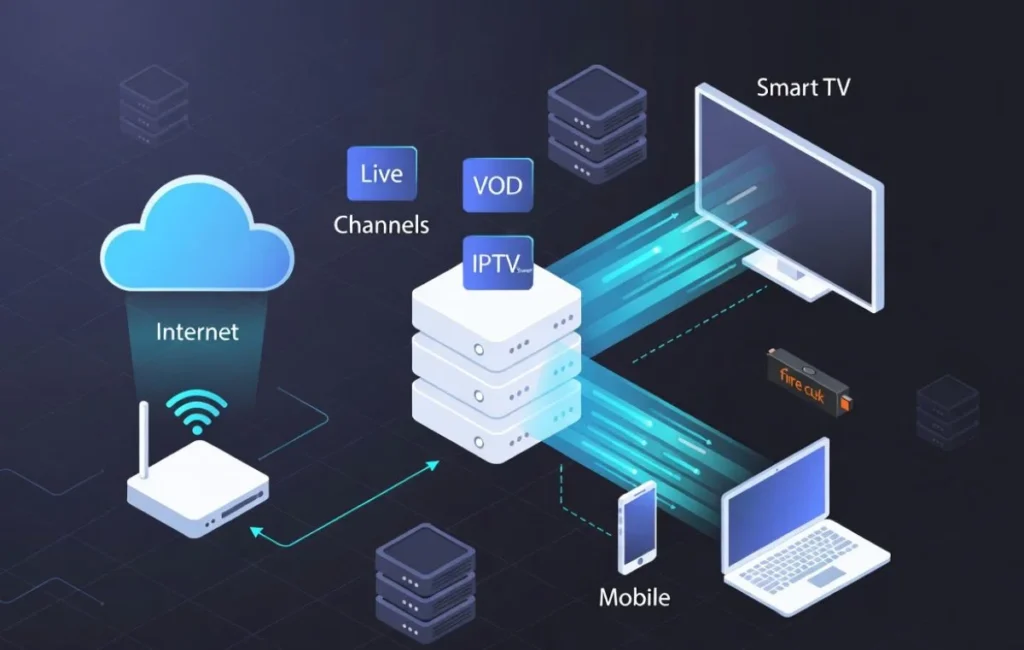
- Content Delivery: Providers host channels and VOD on powerful servers.
- Streaming: Your device connects to these servers via the internet and streams the content in real-time.
- Player Apps: You use apps like TiviMate, IPTV Smarters Pro, GSE Smart IPTV, or built-in players on smart TVs.
- Internet Requirement: A stable connection of at least 10–25 Mbps is recommended for HD/4K streaming. Wi-Fi works, but wired Ethernet is more stable.
This makes IPTV highly flexible — you can watch on multiple devices without extra hardware in many cases.
IPTV Subscription vs Traditional Cable TV
Here’s a quick comparison:
| Feature | IPTV Subscription | Traditional Cable/Satellite |
|---|---|---|
| Monthly Cost | $10 – $25 (average ~$15) | $80 – $150+ (with fees) |
| Contract | Usually month-to-month | 12–24 months often required |
| Channel Count | 10,000 – 165,000+ | 100 – 500 |
| On-Demand Content | Massive VOD libraries | Limited or extra cost |
| Device Flexibility | Smart TV, Firestick, phone, PC | Mainly TV with set-top box |
| Installation | None (just an app) | Technician visit required |
| Picture Quality | Up to 4K/8K on good providers | HD or 4K on premium plans |
Key takeaway: IPTV is significantly cheaper and more flexible for most users, but quality and reliability vary greatly between providers.
Pros and Cons of an IPTV Subscription
Pros:
- Much lower cost than cable
- Huge channel selection (including international and sports)
- No long contracts — cancel anytime
- Watch anywhere with internet
- Often includes replay/catch-up features
- Supports 4K and multi-device streaming
Cons:
- Depends heavily on your internet speed and stability
- Quality varies — some providers suffer from buffering
- Legal risks if the service streams copyrighted content without licenses
- Customer support can be hit-or-miss with cheaper options
- Occasional downtime during peak events
Is IPTV Subscription Legal?
Important: IPTV technology itself is completely legal. Many official services (like YouTube TV, Hulu + Live TV, Fubo, or Sling) are licensed IPTV/OTT platforms.
However, many low-cost IPTV subscriptions operate in a legal gray area or are outright unlicensed. These services often provide premium channels without proper rights.
Risks of unlicensed IPTV:
- Your ISP may send warnings or throttle your connection
- Potential copyright notices
- Service can disappear suddenly
- Security risks (malware in apps or links)
Recommendation: Whenever possible, choose verified legal services. If exploring third-party IPTV, do thorough research, read recent user reviews, and consider using a VPN for privacy.
How Much Does an IPTV Subscription Cost in 2026?
Pricing in 2026 typically ranges from:
- Budget plans: $9 – $15 per month
- Mid-range (recommended): $15 – $25 per month
- Annual plans: Often discounted to $89 – $150 per year (effective ~$7–$12/month)
Longer subscriptions (6–12 months) usually offer the best value. Test with a 1-month plan first.
Features that affect price: channel count, 4K support, VOD size, anti-buffering tech, and multi-device connections (usually 1–5 devices).
How to Set Up an IPTV Subscription (Step-by-Step)
- Choose and Purchase a Plan
Research providers carefully. Pay with PayPal or credit card for buyer protection. - Receive Credentials
You’ll get username, password, and M3U/ Xtream Codes URL via email. - Install a Player App
- Firestick/Android: TiviMate (premium recommended) or IPTV Smarters Pro
- Smart TV: Built-in or download compatible app
- iOS/PC: GSE Smart IPTV or VLC
- Add Your Subscription
Enter the credentials in the app and load the playlist. - Test Stability
Check popular channels and sports events for buffering.
Pro tip: Use a VPN (like ExpressVPN or NordVPN) with IPTV for better privacy and to bypass potential geo-restrictions.
What to Look for in a Good IPTV Subscription
When choosing a provider in 2026, prioritize these factors:
- Uptime & Stability — Look for 99%+ claims and real user feedback
- Channel & VOD Quality — Diverse selection + regular updates
- Customer Support — Responsive 24/7 chat or ticket system
- Trial or Money-Back Guarantee — At least 24–48 hours testing
- Device Compatibility — Multi-device support
- Security — No shady payment methods
- Reviews — Check recent (2026) independent reviews and forums
Avoid providers making unrealistic promises (e.g., “unlimited everything for $5 forever”).
Final Thoughts: Is an IPTV Subscription Worth It?
For many households, especially those frustrated with rising cable bills, a quality IPTV subscription can save hundreds of dollars per year while offering more content and flexibility.
However, success depends on choosing a reliable provider and having a strong internet connection. Always prioritize legality and stability over the cheapest price.
If you want maximum peace of mind, start with official services like YouTube TV or Fubo. If you’re comfortable exploring options and understand the risks, many users report excellent experiences with well-reviewed third-party IPTV subscriptions.
Have you tried IPTV yet? What’s your experience with cable vs IPTV? Share in the comments below — I’d love to hear your thoughts and help answer any specific questions.
Disclaimer: This article is for informational purposes only. Streaming copyrighted content without proper licensing may violate laws in your country. Always verify the legality of any service before subscribing.